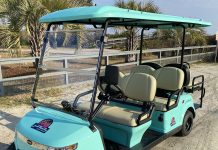

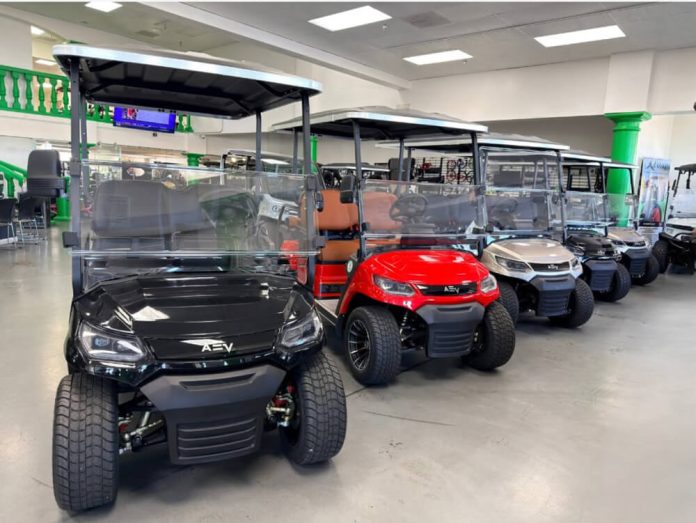
A golf cart may look great in photos or on a showroom floor, but appearance does not tell you how it will perform. Whether you are considering a new or used model, a test drive can reveal problems and help you evaluate its condition, comfort, and suitability.
Inspect the Golf Cart Before Driving
A reputable golf cart dealer should give you enough time to inspect the vehicle and take it for a proper test drive.
Begin with a quick walk around the cart. Look for body damage, corrosion, leaks, loose parts, damaged wiring, and uneven tire wear. Check that the tires appear properly inflated and have enough tread.
Test the headlights, brake lights, turn signals, horn, mirrors, and seat belts when equipped. These features are especially important for neighborhood driving.
Test the Acceleration and Power
The golf cart should accelerate smoothly when you press the pedal. Hesitation, surging, or sudden power loss may point to a problem with the batteries, motor, controller, fuel system, or engine.
Drive on level pavement and, if possible, a slight incline. A hill can reveal problems that may not be noticeable on flat ground. If the cart will carry several passengers, consider how the added weight may affect acceleration and range.
Check the Brakes
Test the brakes at slow and moderate speeds in a safe area. The cart should stop smoothly and remain straight without pulling to either side. Listen for grinding or squeaking and watch for delayed braking or excessive pedal travel.
Do not forget the parking brake. Engage it on a slight incline to confirm that it holds the cart securely.
Evaluate the Steering and Handling
Steering should feel responsive and controlled. The cart should travel straight without drifting or requiring constant correction. Excessive steering-wheel play, shaking, pulling, or difficulty turning could indicate problems with the alignment, tires, suspension, or steering components.
Make several turns in both directions to determine whether the cart is easy to maneuver in the places you plan to use it.
Listen for Unusual Noises and Vibrations
Pay attention to clicking, grinding, rattling, squealing, or humming. Notice any vibration through the steering wheel, floor, or seats. These warning signs may come from the brakes, bearings, suspension, motor, drivetrain, or a loose accessory.
Drive across a slightly uneven surface if one is available. The suspension should keep the cart stable without excessive bouncing, leaning, or bottoming out.
Evaluate the Battery or Engine
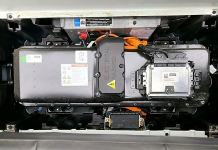
For an electric golf cart, check the battery level before and after the drive. A rapid drop in the charge indicator or noticeable loss of power deserves further investigation. Ask about the battery type, age, maintenance history, and warranty. Battery condition should factor into the purchase price.
For a gas golf cart, make sure the engine starts easily and runs consistently. Watch for smoke, strong fuel odors, leaks, hesitation, or unusual engine noise.
Consider Comfort and Everyday Use
Sit in each seating position and check the legroom. Confirm that visibility is clear and the controls are easy to reach. Consider passenger capacity, storage, range, and how the cart will fit into your routine. Test any installed accessories as well.
Ask Questions Before You Buy
Request maintenance records, warranty information, and details about previous repairs. Ask whether the cart has been modified or involved in an accident. If you have concerns about a used cart, arrange for an inspection by a qualified golf cart technician.
A careful test drive can reveal problems that specifications and photos cannot. Take your time, compare more than one cart, and do not feel pressured to purchase a vehicle that does not perform as expected. The right golf cart should feel safe, comfortable, and well suited to how you plan to use it.