

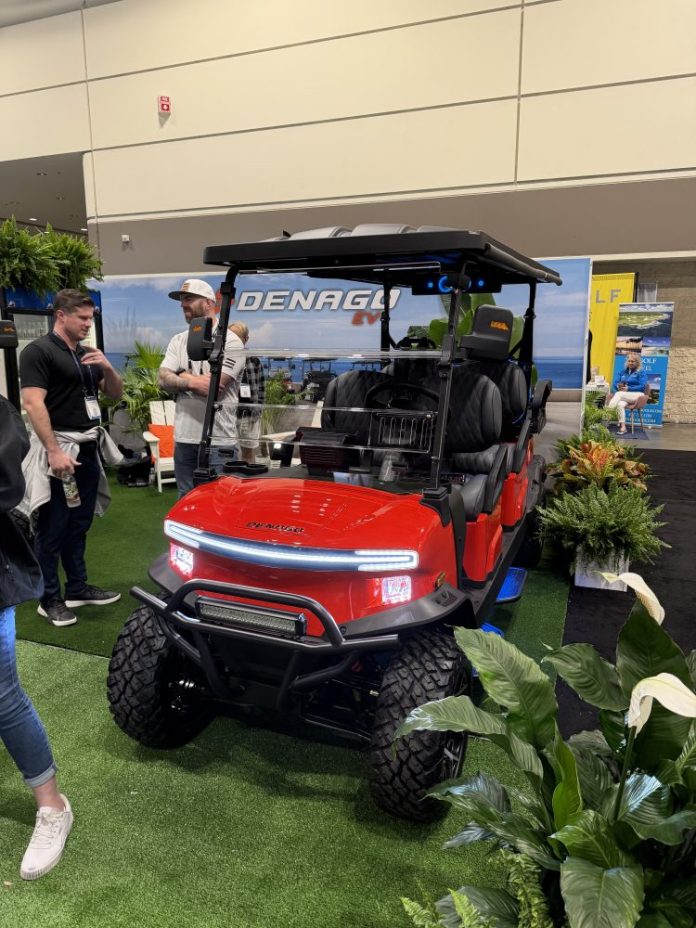
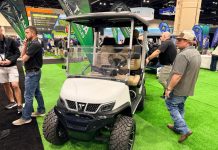
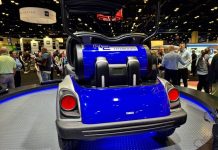
The 2026 PGA Show in Orlando has officially wrapped, and the takeaway is undeniable: the traditional “golf cart” is dead. In its place is the high-tech, Personal Transportation Vehicle (PTV), equally at home on suburban streets as the 18th fairway. This year marked a historic pivot where the line between utility vehicle and lifestyle EV finally vanished. From hardware giants to software disruptors like Motorcode, the show provided a glimpse into a world where mobility is defined by connectivity and comfort rather than just getting from tee to green.
1. The Digital Backbone: The Rise of Motorcode
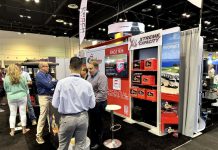
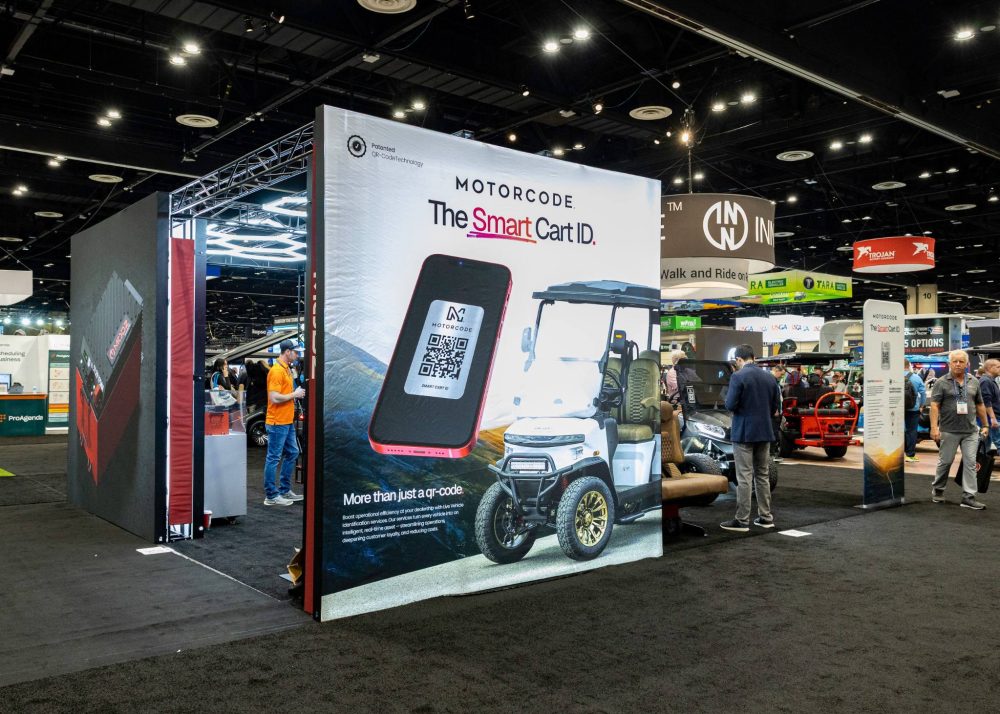 While flashy carts grabbed headlines, the real “quiet revolution” happened in the operations booths with Motorcode. Backed by MODZ, this digital platform is modernizing a historically fragmented industry. At the show, they demonstrated how AI-generated descriptions and customizable templates cut vehicle posting times from 25 minutes to five—a game-changer for high-volume dealers.
The most discussed feature was the “Digital Glove Box.” Every cart sold now includes an Adaptive QR code. It’s context-aware: a buyer scans it for specs, an owner for manuals and warranty info, and a technician for internal service logs. By centralizing this data, Motorcode is “automotive-izing” the industry, professionalizing the ownership experience for the modern LSV buyer.
2. The Disruptor Row: Denago, ICON, Tomberlin, Star EV, and Atlas
The “New Guard” defined the 2026 show floor by satisfying the modern craving for automotive-grade technology. Atlas Carts stole much of the spotlight with their Gen 2.5 lineup, featuring a staggering 12.5-inch vertical touchscreen—the largest in the industry—equipped with wireless Apple CarPlay, Android Auto, and phone mirroring.
Atlas shook the industry by pairing this tech with an unprecedented “Confidence Standard” warranty: a Lifetime Powertrain Warranty, a 10-year battery warranty, and a 3-year bumper-to-bumper plan.
Not to be outdone, Denago EV showcased the Nomad Max, a street-legal powerhouse with a 72V lithium system and integrated 13-inch dash tech.
ICON EV held the world debut of its X-Series and the rugged
EPIC FX, maintaining their dominance in the “all-inclusive luxury” segment with a 10-year Eco Lithium guarantee.
Tomberlin pushed safety boundaries with the Engage GTZ, featuring the patented SmartPark™ automatic e-brake and “CoolTouch” upholstery designed for the Florida sun. Meanwhile,
Star EV launched the Leo and the Gemini, the latter an automotive-inspired marvel with a high-output 8hp motor and a class-leading 90-mile range.
Together, these five brands have fundamentally shifted the market away from “basic fleet carts” toward vehicles that serve as high-end electric cars in a compact, open-air package. These are no longer just tools for the course; they are status symbols and primary modes of local transportation for a tech-savvy generation that views connectivity and safety as non-negotiable standards.
3. The “Big Three”: Quality and Connectivity
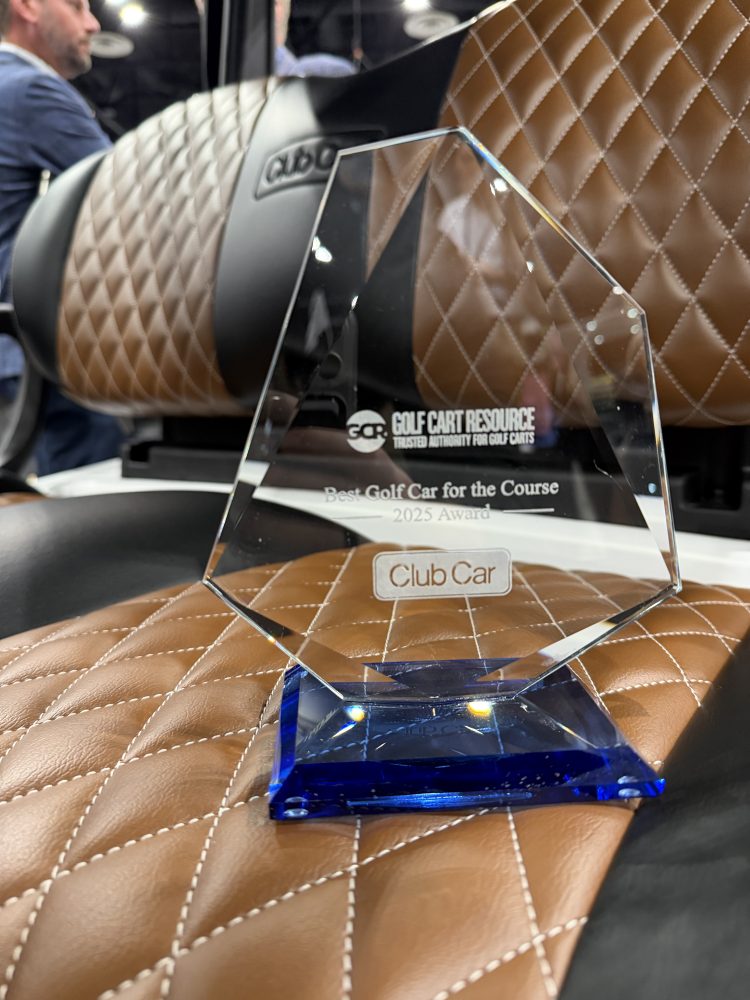
The powerhouses—Club Car, E-Z-GO, and Yamaha—focused on refinement. Club Car’s Onward series featured a dash redesign and the 7-inch “Visage” screen for diagnostics and GPS, leaning heavily on their 20-year reputation for resale value.
 E-Z-GO’s Liberty 4F prioritized the social experience with four forward-facing seats and Intella screen technology, which allows parents to set speed limits via PIN code.
Yamaha stayed true to mechanical excellence, making their Independent Rear Suspension (IRS) standard across all lithium models. While others focus on screens, Yamaha is doubling down on the “ride,” offering the smoothest electric experience paired with legendary Japanese engineering.
4. The LSVDA and the Neighborhood Revolution
The Low Speed Vehicle Dealer Association (LSVDA) highlighted a massive shift: 40% of industry growth is now driven by “lifestyle” use. As states like Florida and Texas expand LSV-friendly laws allowing speeds up to 35 mph, the demand for street-legal safety has triggered an “arms race” in technology.
Standard equipment now includes backup cameras and three-point seatbelts. LSVDA data shows neighborhood buyers spend $4,000 more on accessories than golfers, seeking upgraded lithium packs and premium sound. For dealers, the message is clear: the profit is in the “street.” As the LSVDA advocates for uniform safety standards, the distinction between a golf cart and a car continues to blur.
Summary: The Tesla Era of Golf
The 2026 PGA Show confirmed the industry has entered its “Tesla Era.” Hardware is faster, ranges now average 60–90 miles, and luxury is standard. But more importantly, golf cart commerce is now a digital-first enterprise. From the high-spec luxury of Denago and Atlas to the operational efficiency of Motorcode, the transition to high-tech mobility is complete. Whether moving people across a resort or a neighborhood, the future is quiet, electric, and more connected than ever.



I really enjoy reading this article, such an excellent piece, continue the good work, do you post often? you just got a fun from the eiffel tower paris. we are the best guide for paris eiffel tower. visit our site at https://eiffeltower-ticketparis.com/. thank you hope to hear from you.